EN 1143-1 Certified Safes: What European Importers Must Know Before Buying
Direct Answer Paragraph: For European wholesale importers and security product distributors, understanding EN 1143-1 certification is paramount. This European standard rigorously tests and grades safes for their resistance against burglary, providing a clear benchmark for security levels and ensuring compliance with insurance requirements across the continent.
Introduction: Navigating European Safe Standards with EN 1143-1 Certified Safes
In the competitive landscape of security products, especially for European wholesale importers, the integrity and certification of safes are non-negotiable. The EN 1143-1 certified safe stands as the definitive benchmark for burglar-resistant safes, strongrooms, and vault doors within Europe. This comprehensive guide will demystify the EN 1143-1 standard, explain its resistance grades, detail the verification process, and highlight why sourcing from a certified Chinese manufacturer like Shonelea, based in Hengshui, offers a strategic advantage in terms of cost-effectiveness without compromising on quality or compliance.
What is EN 1143-1 Certification?
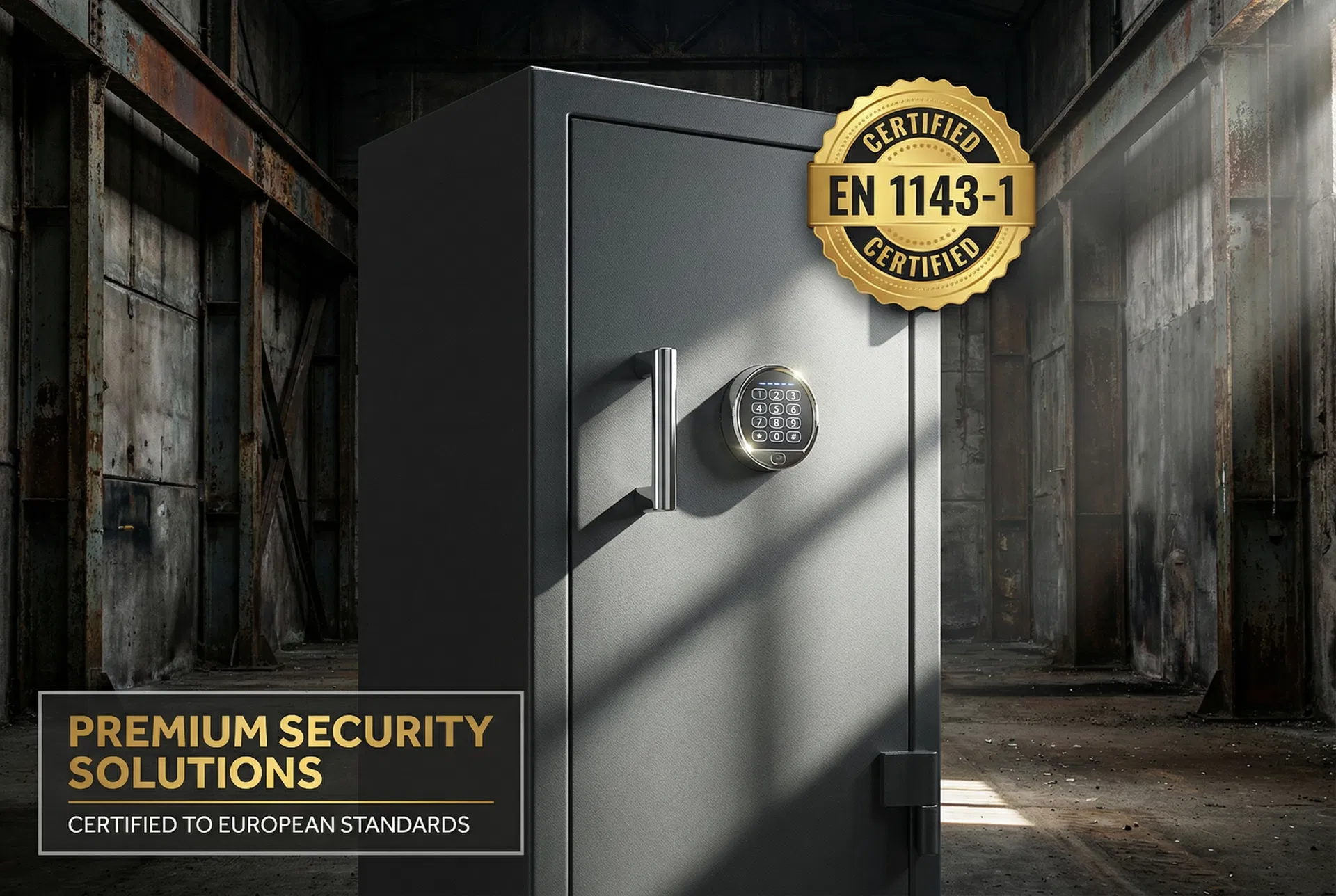
What is EN 1143-1 Certification? EN 1143-1 is the leading European standard that specifies requirements for the construction, testing, and classification of burglar-resistant safes, strongroom doors, and strongrooms. It ensures that security products can withstand professional attack methods using various tools, providing a standardized measure of protection across Europe.
Developed by the European Committee for Standardization (CEN), EN 1143-1 is more than just a label; it's a guarantee of a product's tested resistance against forced entry. This standard is crucial for European safe standard compliance, as it dictates the minimum security features and performance criteria that safes must meet to be considered fit for purpose. Without this certification, safes may not be insurable for high-value contents, posing significant risks for both distributors and end-users.
Understanding EN 1143-1 Resistance Grades: From Grade 0 to VI
The core of the EN 1143-1 standard lies in its grading system, which classifies safes based on their burglar-resistant safe certification. These grades, ranging from Grade 0 to Grade VI (and even higher for specialized applications), indicate the level of resistance a safe offers against different attack tools and methods. The higher the grade, the greater the protection and the longer the safe can withstand a determined attack.
Each grade is determined by a rigorous testing process that measures the time it takes for skilled testers to gain partial or full access using a defined set of tools. This time is quantified in Resistance Units (RU), where each tool is assigned an RU value per minute of use. For instance, a sledgehammer has a lower RU value than a diamond core drill, reflecting the varying intensity and hazard potential of different attack methods.
Breakdown of EN 1143-1 Resistance Grades
Here’s a general overview of the resistance grades and their typical applications, though specific insurance values can vary by country and insurer:
| Resistance Grade | Cash Cover (Indicative) | Valuables Cover (Indicative) | Typical Application |
|---|---|---|---|
| Grade 0 | €6,000 | €60,000 | Home, small office, basic security |
| Grade I | €10,000 | €100,000 | Home, small business, enhanced security |
| Grade II | €17,000 | €170,000 | Medium business, retail, high-value home items |
| Grade III | €35,000 | €350,000 | Commercial, jewelry stores, high-risk environments |
| Grade IV | €55,000 | €550,000 | Banks, high-end retail, critical asset protection |
| Grade V | €75,000 | €750,000 | Financial institutions, government, extreme risk |
| Grade VI | €110,000 | €1,100,000 | Maximum security, vault applications |
Note: These figures are indicative and can vary. Connecting a safe to an alarm system (burglar alarm system) can often double the maximum insured value of the contents.
Verifying EN 1143-1 Certification: What to Look For
For European importers, ensuring the authenticity of an EN 1143-1 certified safe is paramount. A genuine certified safe will always bear a certification label or sticker, typically found on the inside of the safe door. This label is issued by an accredited testing institute and contains vital information:
- Certification Body Logo: Look for logos from recognized European certification bodies such as ECB•S (European Certification Body) or VdS (Vertrauen durch Sicherheit).
- Resistance Grade: Clearly states the EN 1143-1 grade (e.g., Grade I, Grade III).
- Manufacturing Number: A unique, traceable number linking the safe to its manufacturing records.
- Year of Manufacture: The year the safe was produced.
- Approval Number: The specific approval number from the certification body.
- Weight: The total weight of the safe, which is a factor in its resistance.
It is crucial to verify these details. Reputable manufacturers, like Shonelea, provide comprehensive documentation and allow for verification of their certifications, ensuring that every product meets the stringent European safe standard requirements. This transparency is key to building trust and ensuring compliance for wholesale buyers.
The Importance of T2 Certification
In recent years, the EN 1143-1 standard has seen updates, including the introduction of T2 certification. This signifies that a safe has been tested against more advanced and sophisticated burglary tools, offering enhanced, future-proof protection. For importers, opting for safes with T2 certification provides an additional layer of assurance against evolving threats.
Shonelea: Your Strategic Partner for EN 1143-1 Certified Safes
As a professional safe and vault manufacturer based in Hengshui, China, Shonelea offers a compelling value proposition for European B2B wholesale buyers. While European-made alternatives often come with higher price tags due to labor and material costs, Shonelea provides equally robust and fully compliant EN 1143-1 certified safe solutions at a significantly more competitive price point. This cost saving does not come at the expense of quality or adherence to European standards.
Why Shonelea Stands Out:
- Unwavering Compliance: Every Shonelea safe destined for the European market undergoes rigorous testing and is certified to EN 1143-1 standards by recognized European bodies like ECB•S. We understand the critical importance of compliance for our European partners.
- Cost-Effectiveness: Our strategic location in Hengshui, combined with efficient manufacturing processes, allows us to offer premium-quality safes at prices that provide a distinct competitive advantage for importers.
- Quality Craftsmanship: Shonelea utilizes high-grade materials and advanced manufacturing techniques to produce durable and reliable safes. Our commitment to quality ensures that our products not only meet but often exceed the expectations of the market.
- Diverse Product Range: Beyond standard burglar-resistant safes, Shonelea manufactures a wide array of security solutions, including internal linking opportunities such as electronic safes, fireproof safes, biometric safes, and hotel safes, all designed with security and functionality in mind.
- Global Expertise, Local Understanding: With extensive experience in international trade, Shonelea understands the specific needs and regulatory landscapes of the European market, making us an ideal partner for seamless importation.
Conclusion: Secure Your Business with Confidence
For European wholesale importers and security product distributors, the decision to purchase safes is a critical one, directly impacting client trust and asset protection. By prioritizing EN 1143-1 certified safe products, you ensure adherence to stringent European standards and provide your customers with reliable, independently verified security. Shonelea, from its manufacturing base in Hengshui, stands ready to be your trusted partner, offering high-quality, compliant, and cost-effective security solutions that empower your business to thrive in the competitive European market.
Frequently Asked Questions (FAQ)
What does EN 1143-1 mean for safe insurance?
EN 1143-1 certification is crucial for safe insurance as it provides a standardized measure of a safe's burglary resistance. Insurers rely on these grades to determine the maximum value of cash and valuables that can be stored within a safe and covered by their policies. A higher EN 1143-1 grade typically corresponds to higher insurable limits, offering greater peace of mind for safe owners.
How is a safe tested for EN 1143-1 certification?
Safes are tested by accredited independent laboratories using a variety of mechanical and thermal tools to simulate real-world burglary attempts. The testing process measures the time and effort required to gain partial or full access to the safe, quantifying this resistance in Resistance Units (RU). The safe must withstand these attacks for a specified duration to achieve a particular resistance grade.
Can a non-certified safe be insured in Europe?
While it might be possible to insure a non-certified safe, it is generally much more difficult and often comes with significantly lower coverage limits or higher premiums. Most European insurers require safes to be EN 1143-1 certified to provide adequate coverage for valuable contents, as this certification guarantees a verified level of security.
What is the difference between EN 1143-1 and EN 14450?
EN 1143-1 is the European standard for high-security, burglar-resistant safes, strongrooms, and vault doors, covering grades from 0 to VI and above. EN 14450, on the other hand, is a standard for secure storage units (security cabinets) with lower security levels, typically used for less valuable items. EN 1143-1 involves more rigorous testing and offers higher levels of protection.
Why choose a Chinese manufacturer like Shonelea for EN 1143-1 safes?
Choosing a reputable Chinese manufacturer like Shonelea, based in Hengshui, for EN 1143-1 certified safes offers significant cost advantages without compromising quality or compliance. Shonelea adheres to strict European testing and certification protocols, providing high-quality, fully compliant safes at a more competitive price point than many European alternatives, making it a strategic choice for wholesale importers.