Fire Safebox Guide: Fire Ratings, Standards & What to Look For
A fire safebox is an essential investment for businesses and individuals seeking to protect their valuable documents and assets from the devastating effects of fire. Understanding the nuances of fire ratings and international standards is crucial when selecting the right fire safebox for your needs. This comprehensive guide will delve into the technical specifications, testing procedures, and key considerations for European importers.
What Is a Fire Safebox?
What is a Fire Safebox? A fire safebox is a specially designed container engineered to protect its contents from high temperatures and fire damage for a specified duration. Unlike regular safes, which primarily focus on burglary protection, a fire safebox incorporates insulating materials and construction techniques to maintain a safe internal temperature, typically below 177°C (350°F), which is the critical temperature at which paper documents begin to char and become illegible. These specialized safes are vital for safeguarding sensitive documents, digital media, and other heat-sensitive valuables during a fire incident.
Fire Safebox Ratings Explained (UL 72, EN 1047-1)
Understanding fire safebox ratings is paramount to ensuring adequate protection. Two of the most recognized and rigorous international standards for fire safeboxes are UL 72 and EN 1047-1. These standards define the testing protocols and performance criteria that a fire safebox must meet to achieve a specific rating.
UL 72 Fire Safebox Standard
The Underwriters Laboratories (UL) 72 standard is widely recognized, particularly in North America, but its influence extends globally. This standard specifies the fire endurance, explosion, and impact tests that a fire safebox must undergo. For instance, a UL Class 350-1 Hr rating signifies that the internal temperature of the fire safebox will remain below 177°C (350°F) for at least one hour when exposed to external temperatures of up to 927°C (1700°F). This is critical for protecting paper documents. Other UL ratings include Class 125 for digital media and Class 150 for magnetic media, which require even lower internal temperature thresholds.
EN 1047-1 Fire Safebox Standard
For European importers, the EN 1047-1 standard, developed by the European Committee for Standardization (CEN), is particularly relevant. This standard is considered one of the most stringent for data and document protection against fire. It includes tests for fire endurance, impact, and explosion, similar to UL 72, but often with even more demanding criteria. For example, an EN 1047-1 S60P rating indicates that the fire safebox will protect paper documents for 60 minutes, maintaining an internal temperature below 170°C. The 'S' denotes data protection, and 'P' signifies paper protection. Shonelea, a leading manufacturer from Hengshui, adheres to these rigorous European standards, ensuring their fire safebox products meet the highest safety benchmarks for B2B wholesale buyers.
How a Fire Safebox Protects Your Documents
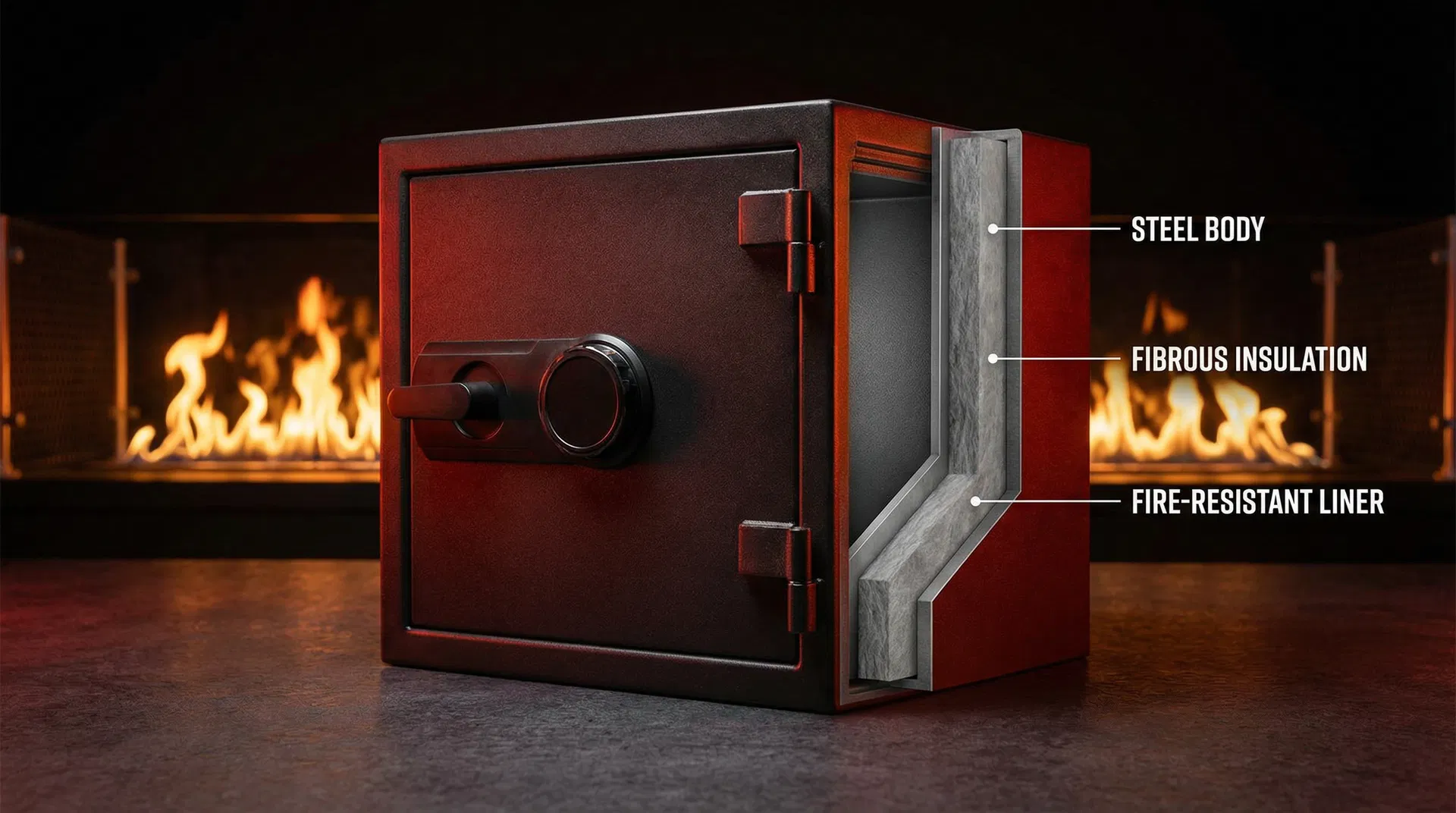
A fire safebox employs several mechanisms to protect its contents. The primary method involves multi-layered insulation within the safe's walls, door, and ceiling. This insulation, often a proprietary mix of fire-resistant materials, acts as a thermal barrier, slowing down the transfer of heat from the exterior to the interior of the fire safebox. When exposed to extreme heat, these materials release moisture in the form of steam, which further cools the interior and prevents the contents from reaching their ignition or charring point. The robust construction and tight seals also prevent hot gases and smoke from entering the fire safebox, which could otherwise damage sensitive items.
Choosing the Right Fire Safebox for Your Business
Selecting the appropriate fire safebox for your business requires careful consideration of several factors. First, assess the type of assets you need to protect. Paper documents, digital media, and magnetic media each have different temperature tolerances. Second, determine the required fire rating based on the potential fire risks and the value of the contents. A higher rating, such as a 120-minute fire safebox, offers extended protection. Third, consider the size and capacity of the fire safebox to accommodate all your valuables. Finally, evaluate additional features like water resistance, security features against theft, and ease of installation. Shonelea offers a diverse range of fire safeboxes designed to meet the varied needs of European businesses, from compact models for small offices to large capacity units for industrial applications.
Shonelea Fire Safebox Product Range
Shonelea is committed to providing high-quality fire safebox solutions that meet stringent international standards. Our product range includes various models, each designed with specific fire ratings and security features to cater to diverse business requirements. From UL 72 certified safes to EN 1047-1 compliant data safes, Shonelea ensures that every fire safebox offers reliable protection. Our fire safeboxes are rigorously tested to withstand temperatures up to 1200°C for 30 minutes, ensuring your critical assets remain safe. We also offer models with advanced locking mechanisms and robust steel construction, providing both fire and burglary protection. Explore our comprehensive catalog, which also includes our range of security safes and deposit safes, to find the perfect fire safebox solution for your enterprise.
Fire-Resistant vs. Fireproof Safebox: What's the Difference?
The terms fire-resistant and fireproof are often used interchangeably, but in the context of fire safeboxes, there's a subtle yet crucial distinction. A fire-resistant safebox is designed to withstand fire for a specified duration and temperature, delaying the heat transfer to its contents. This means it offers protection up to a certain point, after which its protective capabilities may diminish. For example, a fire-resistant safebox might be rated for 30 minutes at 1200°C.
Conversely, the term "fireproof" implies absolute immunity to fire, which is practically impossible for any material or product under extreme conditions. Therefore, while many refer to these products as "fireproof safes," it's more accurate to use "fire-resistant" to reflect their tested and certified capabilities. All fire safeboxes are fire-resistant to a certain degree, as indicated by their specific fire ratings. Shonelea’s fire safeboxes are meticulously engineered to provide superior fire resistance, giving businesses peace of mind.
Key Data Points for Fire Safebox Protection
When evaluating a fire safebox, several specific data points are critical for understanding its protective capabilities:
- Internal Temperature Threshold: For paper documents, the internal temperature of a fire safebox must remain below 177°C (350°F) to prevent charring. For digital media, this threshold is significantly lower, often around 52°C (125°F).
- External Temperature Resistance: High-quality fire safeboxes are tested to withstand external temperatures ranging from 927°C (1700°F) to 1200°C (2200°F) for specified durations.
- Duration of Protection: This is typically expressed in minutes (e.g., 30, 60, 90, 120 minutes) and indicates how long the fire safebox can maintain its internal temperature threshold under fire conditions. For instance, a Shonelea fire safebox might offer 30 minutes of protection at 1200°C.
These data points, combined with certifications like UL 72 and EN 1047-1, provide a clear picture of a fire safebox's performance.
Comparison of Fire Safebox Ratings
To further illustrate the differences in fire safebox protection, consider the following comparison of common ratings:
| Rating Standard | Protected Item | External Temperature | Duration | Internal Temperature Limit |
|---|---|---|---|---|
| UL Class 350-1 Hr | Paper Documents | 927°C (1700°F) | 60 mins | 177°C (350°F) |
| UL Class 125-1 Hr | Digital Media | 927°C (1700°F) | 60 mins | 52°C (125°F) |
| EN 1047-1 S60P | Paper Documents | 1090°C (1994°F) | 60 mins | 170°C (338°F) |
| EN 1047-1 S60DIS | Digital Media | 1090°C (1994°F) | 60 mins | 30°C (86°F) |
This table highlights how different ratings cater to the specific needs of various valuable items, emphasizing the importance of choosing the correct fire safebox for your business.
FAQ Section
Q: What is the primary purpose of a fire safebox?
A: The primary purpose of a fire safebox is to protect valuable documents, digital media, and other heat-sensitive items from damage caused by high temperatures during a fire. It achieves this by maintaining a safe internal temperature for a specified duration, as certified by international standards like UL 72 and EN 1047-1, ensuring the integrity of its contents.
Q: How does a fire safebox differ from a regular safe?
A: A fire safebox differs from a regular safe primarily in its construction and intended protection. While regular safes focus on deterring theft and burglary, a fire safebox is specifically designed with insulating materials and advanced sealing mechanisms to resist extreme heat and prevent the internal temperature from reaching critical levels that would damage its contents during a fire incident.
Q: What does a UL 72 Class 350-1 Hr rating mean for a fire safebox?
A: A UL 72 Class 350-1 Hr rating for a fire safebox signifies that during a fire, the internal temperature of the safe will not exceed 177°C (350°F) for at least one hour, even when exposed to external temperatures of up to 927°C (1700°F). This rating is crucial for protecting paper documents from charring and becoming illegible.
Q: Why is the EN 1047-1 standard important for European importers of fire safeboxes?
A: The EN 1047-1 standard is vital for European importers because it is a highly stringent European certification specifically designed for data and document protection against fire. It ensures that fire safeboxes meet rigorous testing protocols, providing assurance of quality and performance for businesses operating within the European market, like those sourcing from Shonelea in Hengshui.
Q: Can a fire safebox protect against both fire and theft?
A: Many modern fire safeboxes are designed to offer dual protection against both fire and theft. While their primary function is fire resistance, they often incorporate robust locking mechanisms, thick steel construction, and anti-pry features to deter unauthorized access. When selecting a fire safebox, it's important to consider both fire ratings and security features to ensure comprehensive protection for your assets.