META: Essential guide for European buyers on CE certified safeboxes. Understand EN 14450, EN 1143-1 standards, documentation, and how to ensure compliant safe import Europe. SLUG: ce-certified-safebox-european-buyers-guide IMAGE: A professional, high-tech image of a CE certified safebox with a subtle European Union flag overlay, surrounded by documents and a globe, emphasizing global trade and security. The safebox should look robust and modern. Focus on a B2B aesthetic. CATEGORY: Buying Guide
CE Certified Safebox: What European Buyers Must Know Before Importing
For European wholesale buyers and importers, navigating the complexities of product compliance is paramount, especially when dealing with security-sensitive items like safeboxes. The European market demands adherence to stringent safety and quality standards, with CE certification standing as a critical gateway. Understanding these requirements is not merely a bureaucratic hurdle; it is a fundamental aspect of ensuring product integrity, market acceptance, and legal compliance. This comprehensive guide delves into the essential knowledge European buyers must possess regarding CE certified safebox products, focusing on the specific standards and documentation necessary for a smooth safe import Europe process.
Understanding CE Certification for Safeboxes
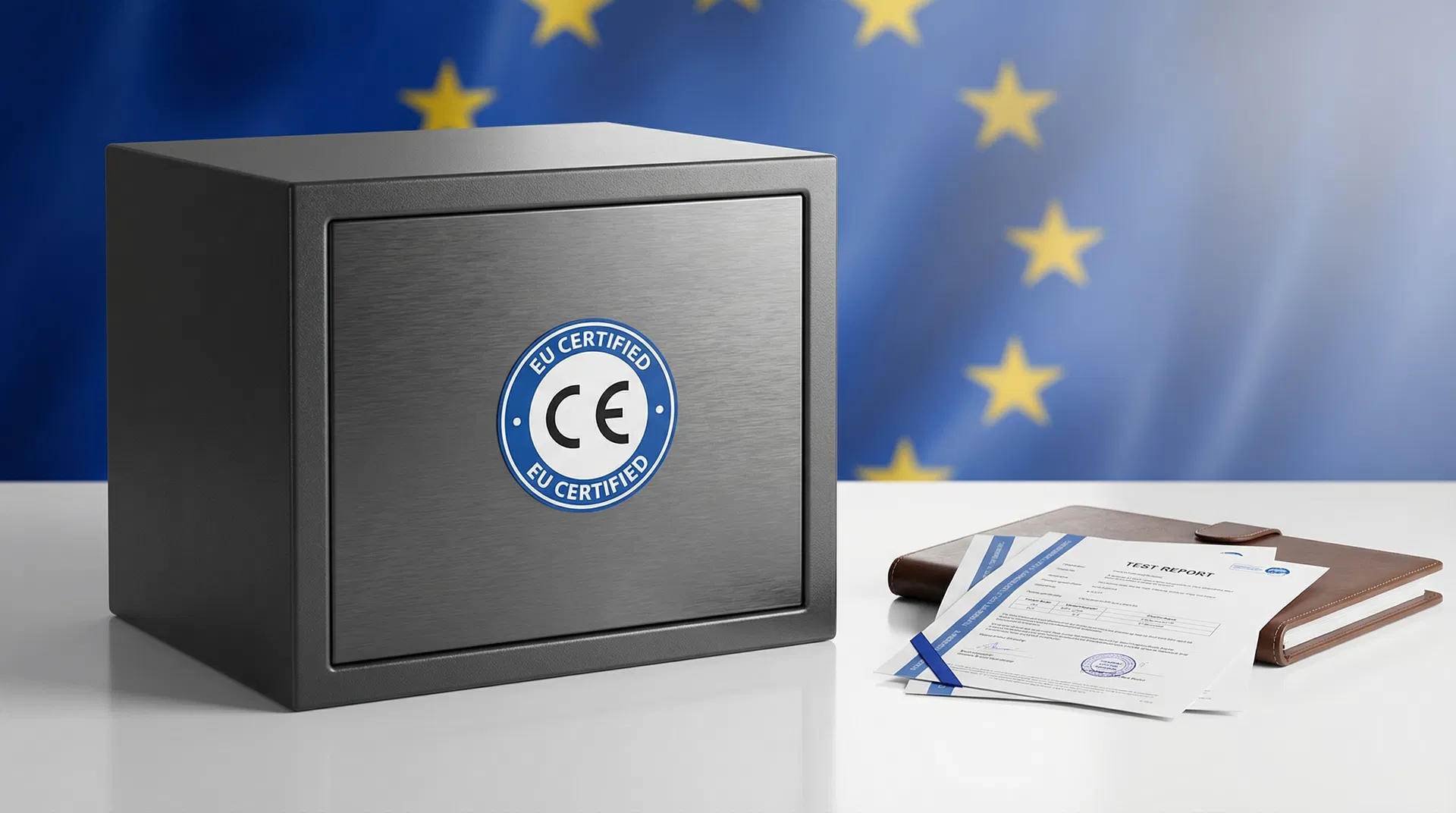
The CE mark, short for Conformité Européenne, signifies that a product meets the health, safety, and environmental protection standards set by the European Union. For safeboxes, this certification is not just a label; it is a declaration by the manufacturer that the product complies with all applicable EU directives and regulations. Without proper CE marking, a safebox cannot be legally placed on the market within the European Economic Area (EEA).
Why CE Marking is Crucial for the European Market
CE marking serves multiple vital functions. Firstly, it acts as a passport, allowing free movement of products within the EEA. For importers, this means that a properly certified safebox can be sold in any EU member state without facing additional national compliance barriers. Secondly, it assures end-users, whether businesses or individuals, that the product meets a baseline level of safety and performance. This builds trust and reduces liability risks for importers and distributors. Finally, it provides a clear framework for manufacturers, guiding them in the design and production of compliant products.
Legal Implications for Importers
Importers bear significant responsibility in ensuring that the products they bring into the EU are CE compliant. This includes verifying that the manufacturer has carried out the necessary conformity assessment procedures, that the technical documentation is available, and that the CE marking is correctly affixed. Failure to comply can result in severe penalties, including fines, product recalls, and even imprisonment in some jurisdictions. Therefore, due diligence in selecting a manufacturer and verifying their compliance credentials is non-negotiable for any entity involved in safe import Europe.
Key European Standards: EN 14450 and EN 1143-1
While CE marking is a general requirement, specific harmonized European standards dictate the technical specifications for safeboxes. The two most relevant standards for security products are EN 14450 and EN 1143-1. These standards define the resistance levels against burglary and provide a classification system that helps buyers understand the security capabilities of a safebox.
EN 14450: Security Safes, Strongboxes, and Strongroom Doors
EN 14450 specifies requirements for security safes, strongboxes, and strongroom doors intended for the protection of valuables against burglary. This standard classifies products into different security levels (S1 and S2), based on their resistance to attack using various tools and methods. Products certified under EN 14450 are typically suitable for domestic use or for businesses requiring a moderate level of security. For instance, an S2 rated CE certified safebox offers a higher level of protection than an S1, reflecting more rigorous testing against forced entry.
EN 1143-1: Resistance to Burglary for Safes, ATM Safes, Strongroom Doors, and Strongrooms
EN 1143-1 is a more rigorous standard, specifically addressing resistance to burglary for safes, ATM safes, strongroom doors, and strongrooms. This standard classifies products into grades (Grade 0 to Grade XIII), with higher grades indicating superior resistance. Products certified under EN 1143-1 are designed for commercial and high-security applications where significant protection against sophisticated burglary attempts is required. The testing procedures for EN 1143-1 involve professional burglars using a wider array of tools, including power tools, for extended periods. When considering a CE certified safebox for high-value assets, an EN 1143-1 certified product is often the preferred choice.
Essential Documentation for Importers
To ensure a compliant safe import Europe process, importers must be meticulous about documentation. The correct paperwork not only proves compliance but also facilitates customs clearance and provides crucial information for product liability and warranty purposes. Key documents include:
- Declaration of Conformity (DoC): This is a formal statement from the manufacturer declaring that the product meets all relevant EU directives and standards. It must include details about the product, the manufacturer, the harmonized standards applied, and the authorized representative (if applicable).
- Technical File: This comprehensive set of documents contains all the information necessary to demonstrate that the product complies with the requirements of the applicable directives. It typically includes design and manufacturing drawings, risk assessments, test reports (from accredited laboratories), user manuals, and a list of components.
- Test Reports and Certificates: These documents, issued by independent, accredited testing bodies, confirm that the safebox has undergone and passed the required tests according to EN 14450 or EN 1143-1. These are critical for substantiating the security grade claimed by the manufacturer.
- User Manuals and Safety Information: Products must be accompanied by clear instructions for use and safety information in the language of the country where they are sold. This ensures proper installation, operation, and maintenance, reducing the risk of misuse or accidents.
Importers should always request and meticulously review these documents from their suppliers to ensure completeness and authenticity. A reputable manufacturer will readily provide all necessary documentation.
Shonelea's Commitment to European Market Compliance
Shonelea, a professional safebox and safe manufacturer based in Hengshui, China, understands the critical importance of European market compliance. With years of experience in producing high-quality security solutions, Shonelea is dedicated to meeting and exceeding the stringent requirements set forth by EU directives and harmonized standards. Our commitment ensures that European wholesale buyers and importers can confidently source CE certified safebox products that are ready for market.
Our CE Certified Product Range
Shonelea offers a diverse range of safeboxes and safes that are rigorously tested and certified to meet European standards, including EN 14450 (S1 and S2) and EN 1143-1 (Grade 0 and above). Our products undergo comprehensive testing by accredited European laboratories to ensure their resistance against various burglary techniques. This commitment to certification means that every CE certified safebox from Shonelea provides reliable security and peace of mind for both our partners and their end-users.
OEM/ODM Capabilities for Tailored Solutions
Recognizing the unique needs of different markets and clients, Shonelea provides extensive OEM (Original Equipment Manufacturer) and ODM (Original Design Manufacturer) services. This allows European buyers to customize safebox designs, features, and specifications while ensuring full compliance with European standards. Whether it's a specific dimension, locking mechanism, or internal configuration, our engineering team works closely with clients to develop bespoke security solutions that meet their exact requirements, all while maintaining the necessary CE certification for safe import Europe.
Factory Direct from Hengshui, China: Quality and Efficiency
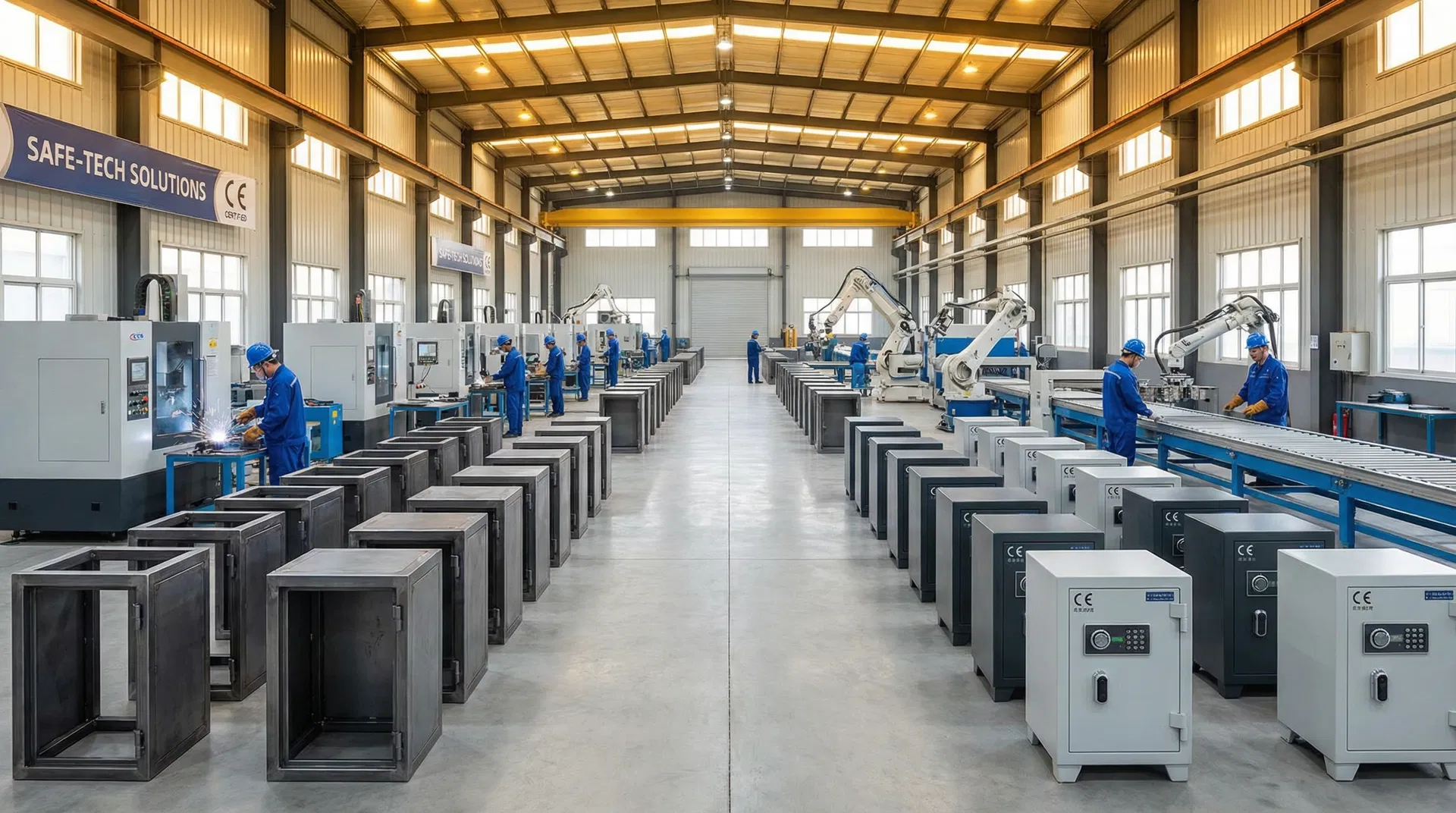
Operating directly from our state-of-the-art manufacturing facility in Hengshui, China, Shonelea controls every aspect of the production process. This direct approach ensures consistent quality, efficient production timelines, and competitive pricing. Our advanced manufacturing capabilities, combined with strict quality control protocols, guarantee that each CE certified safebox leaving our factory adheres to the highest international standards. This direct sourcing model benefits European importers by providing a reliable supply chain and products that are built to last and comply with all relevant regulations.
FAQ Section: Common Questions for European Safebox Importers
Q1: What is the primary difference between EN 14450 and EN 1143-1?
A1: The primary difference lies in the level of security and the testing rigor. EN 14450 covers security safes and strongboxes with lower security levels (S1 and S2), suitable for domestic or light commercial use. EN 1143-1 covers higher security safes and strongrooms (Grade 0 to Grade XIII), designed for commercial and high-risk applications, involving more sophisticated and extensive burglary resistance testing.
Q2: As an importer, what are my responsibilities regarding CE marking?
A2: Importers are responsible for ensuring that products placed on the EU market are CE compliant. This includes verifying the existence and validity of the Declaration of Conformity, ensuring the technical documentation is available, checking that the CE mark is correctly affixed, and maintaining records of compliance. Importers must also ensure that the manufacturer has fulfilled their obligations.
Q3: Can I import a safebox without CE certification if it meets other international standards?
A3: No. For a safebox to be legally placed on the market within the European Economic Area (EEA), it must bear the CE mark, indicating compliance with all relevant EU directives and harmonized standards. While other international standards may indicate quality, they do not substitute for CE certification in the EU.
Q4: How can Shonelea help me ensure my imported safeboxes are compliant?
A4: Shonelea ensures compliance by manufacturing products that are rigorously tested and certified to European standards like EN 14450 and EN 1143-1. We provide all necessary documentation, including Declarations of Conformity and test reports from accredited laboratories. Our OEM/ODM services also allow for custom solutions that adhere to EU regulations, facilitating a smooth safe import Europe process.
Q5: What information should I look for on a safebox's CE label?
A5: A proper CE label on a safebox should include the CE mark itself, the identification number of the Notified Body involved in the conformity assessment (if applicable), the manufacturer's name or registered trademark, and the product's type, batch, or serial number. It should also clearly state the relevant EN standard (e.g., EN 14450 S2 or EN 1143-1 Grade I) and the year of affixing the mark.
Conclusion
Navigating the European market for safeboxes requires a thorough understanding of CE certification and the specific harmonized standards like EN 14450 and EN 1143-1. For wholesale buyers and importers, ensuring that every CE certified safebox meets these requirements is not just about legal obligation but about delivering reliable, high-quality security solutions to their customers. Shonelea stands as a trusted partner, offering a comprehensive range of CE compliant safeboxes, backed by robust OEM/ODM capabilities and direct factory efficiency from Hengshui, China. Our commitment to quality and adherence to European standards simplify the safe import Europe process, allowing our partners to focus on market growth and customer satisfaction.
To learn more about Shonelea's CE certified safeboxes and how we can support your import needs, please contact us at [email protected] or visit shonelea.com.